Two Million People, Zero Chaos: The Urban Design Secret Behind Sapporo's Uncrowded Feel
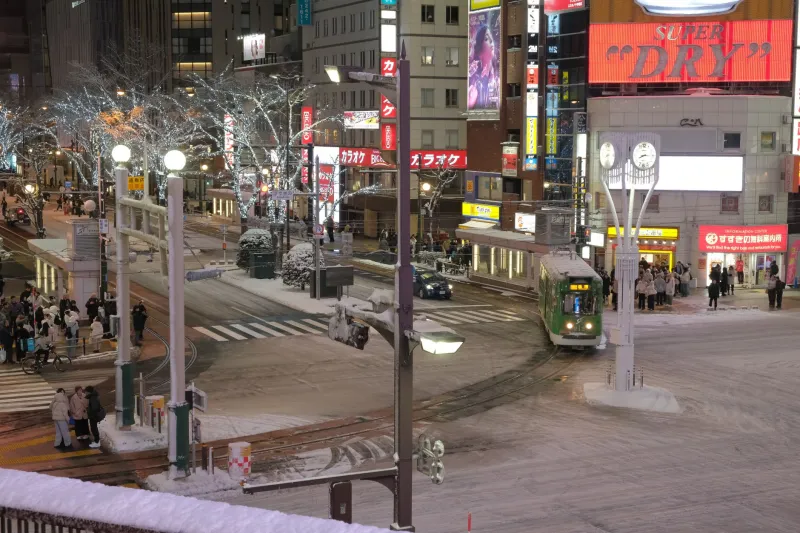
Let's start with a number that might genuinely surprise you: Sapporo has roughly the same population as Houston. Let that sink in for a second. Two million people. A major metropolitan area by any measure. And yet, if you've spent even a day or two here, you've probably caught yourself thinking something like, where is everybody?
This isn't your imagination playing tricks on you. It's the result of deliberate urban planning, a distinct local culture, and a geographical layout that spreads people out in ways that most American cities — let alone Japanese ones — simply don't. Understanding why Sapporo feels the way it does is actually one of the most interesting rabbit holes a curious traveler can fall down.
The Grid That Changed Everything
Sapporo was largely built from scratch in the late 19th century, when the Meiji government decided to develop Hokkaido as a modern agricultural and industrial frontier. Rather than letting the city grow organically the way Osaka or Kyoto did — narrow lanes, layered history, buildings stacked on top of buildings — planners brought in American advisors and adopted a grid system inspired by cities like Washington D.C. and Chicago.
The result is a city that makes immediate spatial sense in a way that most Japanese cities don't. Streets are wide. Blocks are generous. There's actual room between buildings. If you've ever felt genuinely disoriented trying to navigate the backstreets of Shinjuku or the layered chaos of Dotonbori, Sapporo's layout will feel like exhaling after holding your breath for too long.
The main arteries — Odori running east-west, the numbered streets running north-south — give the city a legibility that's almost American in its logic. You always know roughly where you are. That sense of spatial orientation does something psychological: it makes a city feel less overwhelming, less compressed, less like it's closing in on you.
Green Space as a Pressure Valve
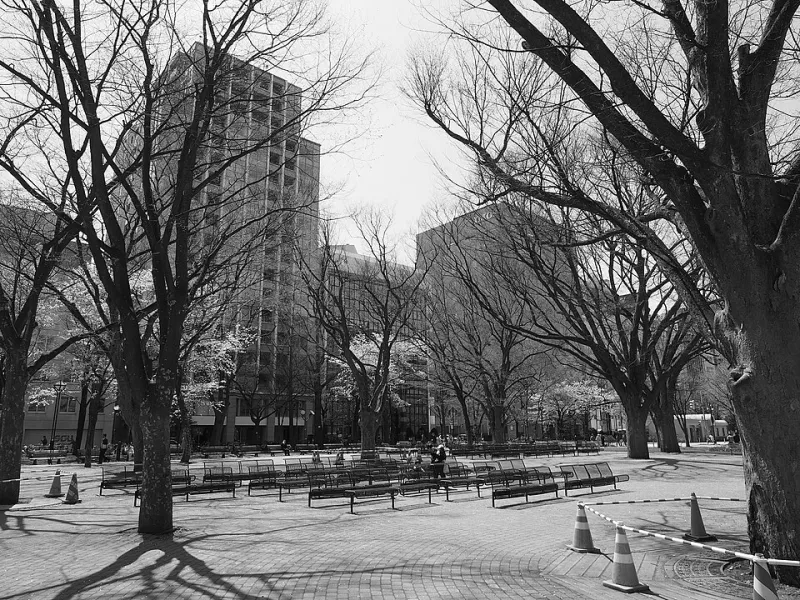
Odori Park is the obvious example, but it's worth lingering on what it actually does for the city's feel. A 1.5-kilometer-wide strip of green running through the heart of downtown, it acts as a literal and figurative breathing room. On a Tuesday afternoon in September, you'll find office workers eating lunch on benches, kids chasing pigeons, older couples strolling at a pace that suggests they have absolutely nowhere to be.
In most American downtowns, a park like this would be either underused or a source of anxiety depending on the city. In Sapporo, it's just... pleasant. Calm. Integrated into daily life in a way that feels effortless.
Beyond Odori, the city is threaded through with smaller parks, tree-lined streets, and the kind of low-density residential zoning that keeps large swaths of the city feeling open and human-scaled. Drive — or better yet, walk — through neighborhoods like Maruyama or Miyanosawa and you'll pass single-family homes with actual yards, community gardens, and streets wide enough that two cars can pass each other without anyone holding their breath.
The Absence of Neon
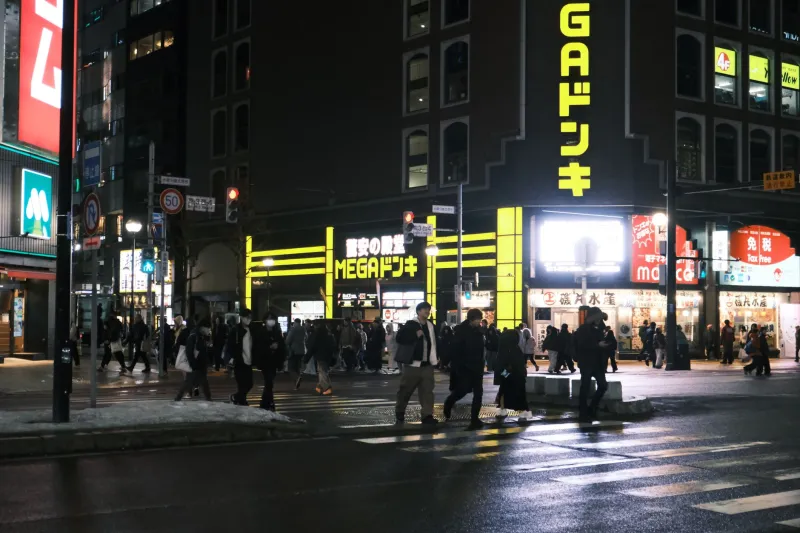
Here's something you might not consciously register until someone points it out: Sapporo doesn't really do neon. Not in the way Tokyo does. Not in the way that makes Shinjuku at night feel like standing inside a pinball machine.
Susukino, Sapporo's entertainment district, has its share of signage and nightlife energy. But even there, the scale is different. The streets are wide enough that the signs don't loom over you. There's sky visible above the buildings. The sensory load stays manageable.
This matters more than it sounds. A significant part of what makes Tokyo or Osaka feel overwhelming to first-time visitors isn't the crowds themselves — it's the cumulative sensory input. The noise, the visual density, the feeling that every surface is trying to sell you something or tell you something. Sapporo turns that dial down considerably, and the effect on your general sense of ease is dramatic.
A Cultural Rhythm That Slows Things Down
Urban design explains a lot, but it doesn't explain everything. There's also something about the way Sapporo moves — its tempo, its social texture — that contributes to the uncrowded feeling.
Hokkaido has a reputation within Japan for being a bit more relaxed, a bit more spacious in its attitudes as well as its geography. Sapporo residents tend to be friendly in a low-key way that doesn't demand anything from you. The pace on sidewalks is noticeably slower than Tokyo. People don't seem to be rushing toward anything in particular, even during what would technically be rush hour.
For Americans used to the ambient stress of New York or LA — or even the relentless suburban busyness of places like Atlanta or Phoenix — this slowness can feel almost disorienting at first. Like you've forgotten something important. Like surely there's somewhere you're supposed to be.
There isn't. That's the point.
Underground and Overhead: The Infrastructure That Hides the Crowd
Sapporo also has a secret weapon that literally moves people out of your line of sight: its underground network. The Chika-Ho — an underground pedestrian path connecting major subway stations through the downtown core — means that on cold or rainy days, thousands of people commute, shop, eat, and go about their lives entirely below street level.
The result? Streets that look even emptier than they technically are, especially in winter. The crowd is there. It's just underground, warm and comfortable, leaving the surface streets to those of us who want to walk above ground and feel like we have the city to ourselves.
It's a bit like discovering a city has a hidden layer. Once you know about it, you start to understand why the streets above feel so spaciously walkable even when the subway stations below are genuinely busy.
What This Means for You as a Visitor
Practically speaking, all of this adds up to a travel experience that's genuinely different from most major Japanese cities. You can walk around downtown Sapporo without developing the thousand-yard stare that Tokyo can induce by day three. You can linger in a neighborhood without feeling like you're fighting for sidewalk space. You can stop and look at something — a storefront, a menu, a map — without becoming an obstacle in a human river.
For Americans who've been curious about Japan but quietly intimidated by the stories of overwhelming crowds and sensory overload, Sapporo is often the city that finally makes everything click. It's Japan — genuinely, authentically Japan — just with the volume turned to a level that lets you actually hear the music.
Two million people. You'd never know it. That's not a flaw in Sapporo's design. It's the whole point.