Sapporo's Subway System, Explained: Everything You Need to Ride It Like You Live Here
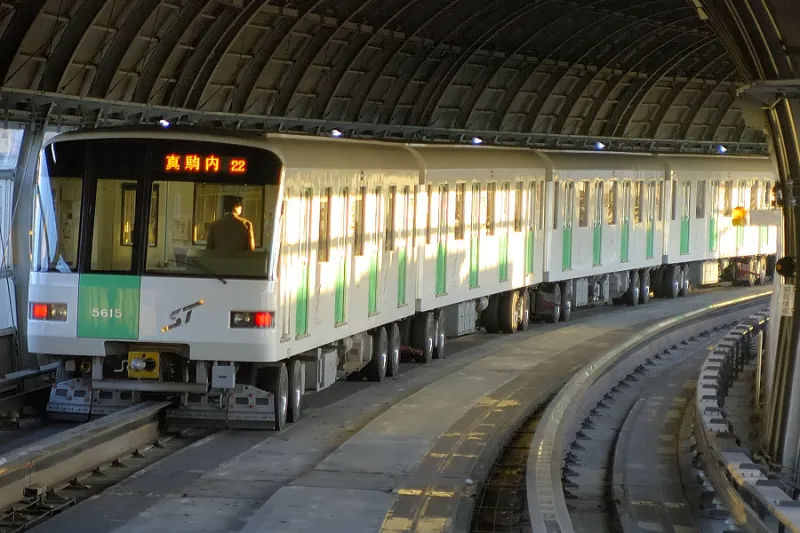
Photo: 出々 吾壱, CC BY-SA 3.0, via Wikimedia Commons
Let's be honest: the first time you stand in front of a Japanese transit map, especially in a city you've never been to, it can feel like a puzzle you weren't warned about. The good news is that Sapporo's subway system is one of the more manageable ones in Japan. Three lines, clearly color-coded, covering the parts of the city you're most likely to want to reach. Once you understand the basic structure, getting around stops feeling like a logistics problem and starts feeling like freedom.
This guide is built for visitors coming from the US who are used to driving everywhere and maybe haven't spent a lot of time on urban rail. We'll cover how the system works, how to pay, what passes are worth buying, and a few station-specific tips that most guides skip over.
The Big Picture: Three Lines, One Logical Grid
Sapporo's subway has exactly three lines, and they're color-coded to make navigation as straightforward as possible.
The Namboku Line (green) runs north to south, cutting through the heart of the city. This is the one you'll use most. It connects the downtown core — including Odori and Susukino — with the northern university district and the southern suburbs.
The Tozai Line (orange) runs east to west. It's the line that takes you out to Maruyama in the west and connects to some of the more residential eastern neighborhoods. If you're heading to the Maruyama area for a weekend wander, this is your line.
The Toho Line (blue) also runs roughly north to south, but slightly east of center. It's the least tourist-heavy of the three, but it connects to Sapporo Station and serves some useful neighborhoods.
All three lines intersect at or near Odori Station, which functions as the system's central hub. Think of it like a transfer point — you can get from any line to any other line by passing through Odori.
Paying for Your Ride: IC Cards vs. Single Tickets
You have two main options for paying, and one of them is clearly better.
Single-trip tickets are bought at vending machines in each station. The machines have an English option (press the flag icon), and you select your fare based on your destination. Fares in Sapporo are distance-based, starting around 210 yen for short hops. This works fine if you're only riding once or twice, but it adds friction to every trip.
IC cards are the smarter move. These are rechargeable tap-to-pay cards that work across the subway, buses, and streetcars. The two you'll hear about most are Kitaca (Sapporo's local card) and Suica (issued by JR East, widely used across Japan). Both work on Sapporo's transit. If you're arriving via New Chitose Airport on a JR train, you can pick up a Suica at the airport before you even reach the city.
To use an IC card, you tap in at the turnstile when you enter and tap out when you exit. The correct fare is automatically deducted. You can reload at any vending machine in the station. It's the same basic logic as a MetroCard in New York or a Clipper card in the Bay Area, just more reliable.
One thing worth knowing: IC cards require a 500 yen deposit that you get back if you return the card before leaving Japan. Keep that in mind when you're calculating whether it's worth getting one for a short trip.
Day Passes and Tourist Cards: When They're Worth It
Sapporo offers a one-day subway pass for 830 yen (around $5.50) that gives you unlimited rides on all three lines for a single day. If you're planning to move around the city a lot — say, hitting Maruyama in the morning, coming back downtown for lunch, and heading out again in the afternoon — this pays for itself quickly.
There's also a combined pass that includes buses and the streetcar, which makes sense if you're planning to use the Sapporo City Tram (the loop streetcar in the southern part of the city). You can buy these passes at any major station from the ticket machines or the station office.
For multi-day visitors, the passes are worth doing the math on each morning based on your plans rather than buying in advance. Some days you'll walk everywhere; others you'll be crossing the city multiple times.
Key Stations Beyond the Tourist Zones
Odori and Sapporo Station get all the attention, but a few other stops are worth knowing about.
Maruyama Koen (Tozai Line) is your gateway to one of the city's nicest residential neighborhoods. The park, the shrine, and a solid cluster of independent cafes are all within easy walking distance of the exit.
Kita-12-jo (Namboku Line) drops you at the edge of Hokkaido University's campus, which is open to the public and genuinely beautiful, especially in fall.
Nakajima Koen (Namboku Line) is often overlooked in favor of Odori, but Nakajima Park is a lovely green space with a pond, a concert hall, and far fewer tourists.
Shin-Sapporo (Toho Line) is the eastern terminus and the connection point for buses heading further into the suburbs. If you're planning a day trip that requires a JR train, note that Shin-Sapporo has a JR station nearby.
Connecting to Buses and the Streetcar
The subway gets you most places, but Sapporo's bus network fills in the gaps — especially for neighborhoods that sit between subway lines. The city also has a historic streetcar (called the "Roppaku" or City Tram) that runs a loop through the Susukino area and south toward Miyanosawa. It's charming, slower than the subway, and worth riding at least once just for the experience.
IC cards work on all of these, which means you don't need to carry change or figure out separate ticketing systems. Tap in, tap out, and let the card handle the math.
Bus stops in Sapporo have digital displays that show arrival times, and most major stops have English transliterations of the destination. It's not as seamless as the subway, but it's manageable.
A Few Practical Things Nobody Thinks to Mention
Station exits matter more than you'd think. Major stations like Odori and Sapporo have a dozen or more exits, and coming out the wrong one can leave you a five-minute walk in the wrong direction. Before you head up the stairs, check the exit map posted near the turnstiles — it shows which exit corresponds to which street or landmark.
The subway stops running around midnight. If you're out late in Susukino (and Susukino does go late), keep an eye on the last train times posted in each station. Taxis are available but not cheap.
Finally, the subway is quiet. Not library-quiet, but Japanese-transit-quiet — people generally don't talk on the phone, music stays in earphones, and conversations happen at a low volume. Following that lead makes you a better guest and honestly makes the ride more pleasant for everyone.
Sapporo's subway won't make you feel like a local overnight. But it'll get you where you're going, on time, without drama — and that's really all you need.