Sapporo Is Stunning on Camera—So Why Aren't Tourists Ruining It?
There's a particular kind of exhaustion that comes with visiting a beautiful place that knows it's beautiful. You've probably felt it—standing in line at some famous viewpoint, waiting your turn behind thirty other people holding their phones at the exact same angle, trying to crop out the crowd in post. It's the tourist trap experience in its purest, most demoralizing form.
Sapporo doesn't do that to you. And the strange thing is, it really should.
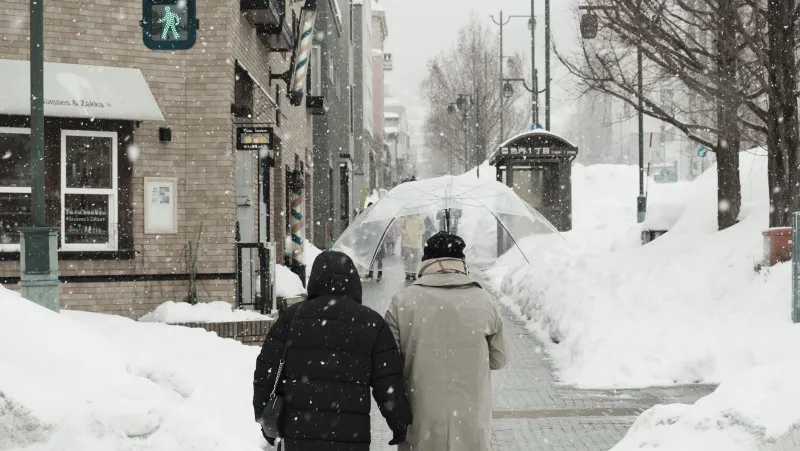
This is a city that turns white and cinematic every winter, where tree-lined boulevards glow gold in autumn, where the clock tower at dusk looks like it was placed there by a production designer. It photographs beautifully. So why hasn't it been overrun with the infrastructure of Instagram tourism—the designated photo spots, the matcha-flavored everything, the lines of visitors waiting to recreate the same shot?
The answer isn't one thing. It's a combination of geography, city planning, local culture, and a kind of quiet confidence that Sapporo seems to have about itself.
The City Was Built for People, Not for Postcards
Sapporo was laid out in the 1870s on a grid system inspired partly by American cities—wide streets, logical blocks, room to breathe. That design wasn't romantic in intention. It was practical. But the side effect, a century and a half later, is a city that feels spacious and navigable in a way that older Japanese cities simply don't.
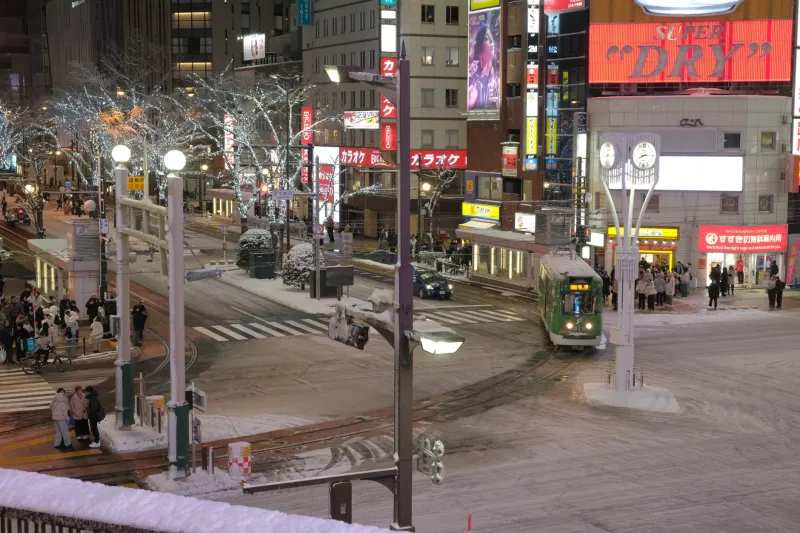
When you're not being funneled through narrow lanes toward a single famous temple gate, something interesting happens: the beauty distributes itself. There's no single choke point where everyone has to stand. Odori Park stretches for twelve blocks. The Susukino entertainment district spills across dozens of streets. Even the beloved Sapporo Beer Museum sits in an open plaza with room to wander.
That diffusion of visual interest is, almost accidentally, the perfect antidote to tourist trap formation. You can't manufacture a line when there's no single spot everyone needs to reach.
Hokkaido's Geography Filters the Crowd
Let's be honest about something: getting to Sapporo takes effort. There's no bullet train from Tokyo—the Shinkansen extension to Hokkaido is still years away from completion. Right now, you're looking at a flight or a long ferry journey. That friction matters.
The tourists who make it to Sapporo tend to be the ones who wanted to be there specifically. They've done a little research. They're not just stopping through on a pre-packaged Golden Route itinerary that hits Tokyo, Kyoto, and Osaka in eight days. That self-selection changes the energy of a place considerably.
You end up with a city that draws curious travelers rather than checklist tourists. And curious travelers, generally speaking, are less interested in manufactured photo moments and more interested in just... looking around.
The Locals Set the Tone
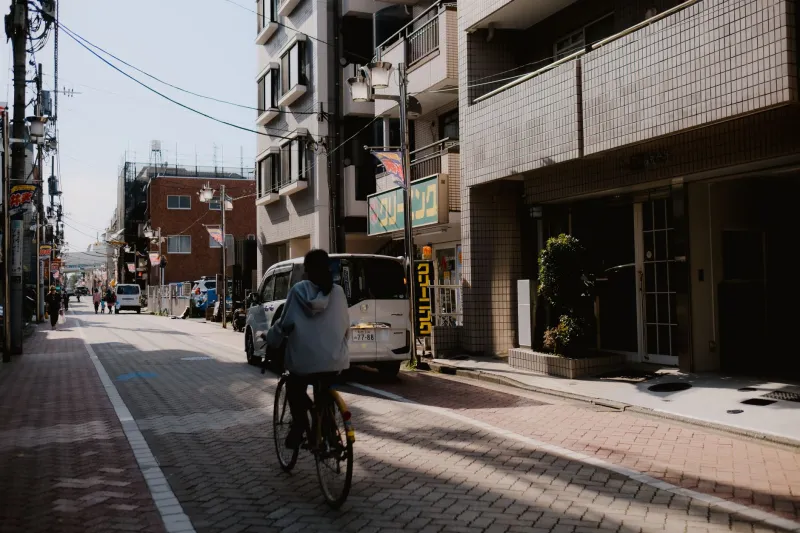
Sapporo has a population of about two million people. It's a real, functioning major city—not a preserved historic district, not a resort town in disguise. The people who live here are going to work, eating lunch, complaining about the snow. They're not performing Japaneseness for visitors, and the city's commercial culture reflects that.
Walk through Tanukikoji, the covered shopping arcade that's been running since the 1870s, and you'll find hardware stores next to ramen shops next to pharmacies. It's not curated. Nobody decided which parts of it should be photogenic. That lack of curation is, paradoxically, what makes it feel worth photographing.
Compare that to some of the more tourism-saturated neighborhoods in other Japanese cities, where storefronts seem to exist primarily as backdrops. Sapporo's commercial life hasn't been aesthetically optimized for outsiders, and that authenticity is something a camera can actually pick up.
Snow Does Something Interesting to a City
Sapporo gets serious winter weather—we're talking meters of snow, not a light dusting. And heavy snowfall has a leveling effect on visual environments. It covers the mundane and the magnificent alike. A parking lot looks interesting under two feet of snow. A ramen shop with a fogged window and a neon sign looks like a film still.
Because the city is beautiful in winter almost incidentally—because the snow is doing the work, not the tourism board—there's no single spot that becomes the designated winter photo location. The whole city becomes the photo. That's genuinely hard to exploit commercially.
The Sapporo Snow Festival in February does draw massive crowds, and yes, there are moments there that feel more staged. But even then, the sheer scale of the event—dozens of massive snow sculptures spread across multiple sites—prevents the bottleneck that turns a beautiful place into a miserable one.
What This Actually Means for Your Trip
If you're the kind of traveler who's grown tired of places that feel like they've been optimized for content creation rather than actual human experience, Sapporo is quietly, almost stubbornly, refreshing.
You'll take great photos here. You'll probably take some of the best travel photos of your life, especially if you visit in winter or during the brief, electric burst of autumn color. But you won't have to fight for them. You won't have to wait in line. You won't have to photoshop out a crowd.
The Hokkaido University campus, with its ginko avenue in fall, draws visitors—but it's also a working university, and the scale of it means there's always room. The view from the Sapporo TV Tower over Odori Park is genuinely beautiful, and the observation deck rarely feels packed. Even the famous Ōkura ski jump, perched in the hills above the city, offers a panoramic view of the urban grid below without the chaos you might expect at a landmark this striking.
None of this is accidental, exactly, but none of it was engineered either. It's the result of a city that grew up thinking about its residents first, that has a geography that filters its visitors, and that has a local culture unbothered by the need to perform for outsiders.
The Rare Thing Sapporo Has Managed to Hold Onto
There's a version of tourism that extracts beauty from a place and leaves something slightly hollowed out behind. You can feel it in cities that have been loved too hard, too loudly, by too many people all at once.
Sapporo hasn't been loved that way yet. It's been appreciated—by travelers who sought it out, by photographers who stumbled into its light, by visitors who came for the ramen and stayed for everything else. But it hasn't been consumed.
For now, at least, you can still stand in the middle of this city with a camera or just your eyes, and feel like you're seeing something real. In the current landscape of global tourism, that's not nothing. That's actually quite a lot.