The Less You've Heard About Sapporo, the More Japanese It Actually Is

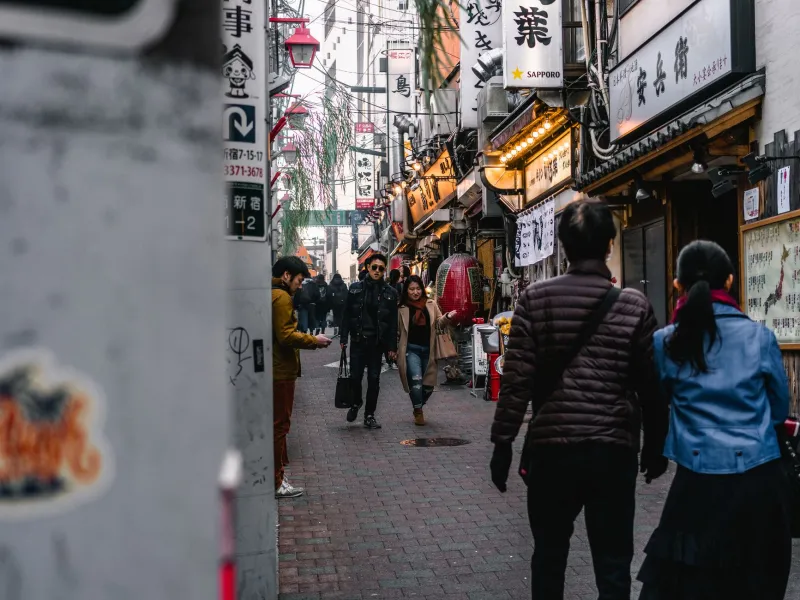
Photo by Photo by Cuvii on Unsplash on Unsplash
There's a version of Japan that exists almost entirely for visitors — the one with the perfectly framed torii gates, the matcha lattes with foam art, the streets so photogenic they feel like a movie set. It's not fake, exactly. But it's been refined, smoothed, and quietly optimized for the gaze of outsiders over decades. You can feel the difference the moment you step somewhere that hasn't.
Sapporo is that somewhere.
Hokkaido's capital city doesn't appear on the standard "two weeks in Japan" itinerary most American travelers cobble together from travel blogs. It doesn't anchor a bullet train route between Tokyo and Kyoto. It doesn't have a UNESCO-listed temple district or a neon alley that's been photographed ten million times. What it has, almost by accident, is the thing most travelers say they're looking for but rarely find: a city that still belongs to the people who live in it.
What Gets Lost When a Place Gets Famous
To understand what makes Sapporo feel different, it helps to think about what happens to a place after it becomes iconic.
Kyoto is a useful example. It's genuinely stunning — no argument there. But large sections of the city have quietly reorganized themselves around the tourist experience. Shops stock what visitors expect to buy. Restaurants cluster near the landmarks. Entire neighborhoods that locals once called home have shifted toward short-term rentals and souvenir stalls. That's not a moral failing; it's just economics. But it changes the texture of daily life in ways that are hard to miss once you know what to look for.
Sapporo never went through that transformation. The international spotlight never really landed here in a sustained way, which means the city never had a reason to reinvent itself for an outside audience. The ramen shops are where they are because that's where the rent made sense and the regulars could find them — not because they're a short walk from a famous landmark. The neighborhood shotengai (shopping streets) still sell the things people in the neighborhood actually need. The festivals happen on the schedule the community set, not the one that fits best into a five-day itinerary.
That's a subtle thing, but it's real. And once you notice it, you can't unfeel it.
Authenticity Isn't a Vibe — It's a Structure
Americans use the word "authentic" a lot when they talk about travel, and it tends to mean something pretty vague — like a place that feels genuine or unperformed. But authenticity isn't really a feeling. It's a set of structural conditions.
A place feels authentic when the rhythms of daily life are set by residents rather than visitors. When the coffee shop opens at the hour that works for morning commuters, not for travelers sleeping off jet lag. When the lunch crowd at the noodle counter is mostly office workers on a 45-minute break, not tourists consulting a top-ten list. When the parks are full on weekday evenings because people actually live nearby and use them.
Sapporo checks those boxes in a way that very few major Japanese cities still do. Walk through Maruyama on a Tuesday afternoon and you're sharing the sidewalk with people running actual errands. Wander into Kotoni or Tsukisamu and you're in neighborhoods that have their own internal logic — their own bakeries and hardware stores and izakayas that have been there for thirty years — because they developed around residents, not itineraries.
That structure is what you're actually responding to when a place feels real.
The Instagram Problem (and Why Sapporo Doesn't Have It)
Here's a strange thing that's happened to travel over the past decade: the most photographed places in Japan have become, in some ways, the least Japanese. Not because they've lost their history or their culture, but because the experience of visiting them has been so thoroughly mediated by images that you spend the whole time trying to recreate a photo you've already seen rather than actually being somewhere.
Sapporo doesn't have that problem. There's no single image of the city that's been shared so many times it's become a cliché. There's no queue of people waiting to take the same shot from the same angle. When you're standing in Odori Park or looking out over the city from the top of the TV Tower, you're just... there. Present. Not performing a version of a trip you pre-visualized on someone else's feed.
For a lot of American travelers, that turns out to be the most disorienting and ultimately the most valuable part of visiting. You have to figure out what you think of the place yourself. And what most people think, once they settle in, is that they didn't expect to like it this much.
The Traditions Nobody Bothered to Commodify
One of the quieter pleasures of spending time in Sapporo is encountering cultural practices that haven't been packaged for sale.
Take the neighborhood matsuri (local festivals) that happen through the summer months. These aren't events designed to attract visitors. They're organized by the local jichikai (neighborhood associations), funded by the community, and attended almost entirely by people who live within walking distance. The food stalls are run by local vendors. The games are for kids in the neighborhood. If you wander in as a visitor, you're genuinely welcome — Japanese hospitality is real — but you're clearly a guest at something that exists independent of your presence.
That's a different feeling than attending a festival that was always meant for you.
The same logic applies to Sapporo's food culture. Hokkaido's agricultural identity — the dairy farms, the seafood, the famously good produce — feeds into the city's restaurants in a direct, unmediated way. Chefs here have relationships with specific farms and fishing operations not because it's a marketing angle but because that's how the regional food economy has always worked. The result is food that tastes like it comes from somewhere, which is rarer than it should be.
What You Actually Gain by Going Somewhere Nobody Told You To
There's a version of the Japan trip that goes: Tokyo, Kyoto, Osaka, maybe Hiroshima, maybe Nara. It's a good trip. Nobody's going to argue with it. But it's also a trip that's been taken so many times, by so many people, that the infrastructure around it has become almost self-contained — a loop that delivers exactly what it promises and very little else.
Sapporo breaks that loop. It puts you somewhere that doesn't know what you expected, which means it can't perform it back to you. You have to engage with it on its own terms. You have to ask locals where they actually eat, take a subway line just to see where it goes, wander into a covered shopping arcade because it's raining and see what's there.
What's there, almost always, is a city living its life — unhurried, unpretentious, and genuinely itself in a way that the most famous destinations in Japan, for all their beauty, haven't been able to hold onto.
That's the Sapporo paradox. The city you haven't heard as much about turns out to be the one that shows you the most.