Why the Most 'Japanese' Place in Japan Doesn't Have a Single Samurai House
Let's start with the thing that sounds crazy: Sapporo, a city that didn't even exist in any meaningful form until the 1870s, might offer a more authentic experience of Japanese culture than Kyoto, Takayama, or Kanazawa — three cities that have spent decades carefully curating their historical identities for international visitors.
If that sentence made you want to close this tab, stick around. Because the argument isn't actually that radical once you understand what 'authenticity' means when you're traveling somewhere that isn't your home country.
The Problem With 'Preserved' Japan
There's a particular kind of travel experience that gets sold to Americans planning a Japan trip. It usually involves narrow cobblestone lanes, wooden machiya townhouses, women in rented kimonos posing for photos, and a general sense that you've stepped back in time. Takayama, Kyoto's Gion district, Kanazawa's Higashi Chaya — these places are beautiful, genuinely so. Nobody's disputing that.
But here's what doesn't get said enough: those experiences are, to a significant degree, staged. Not dishonestly — nobody's lying to you — but they've been shaped, packaged, and optimized for exactly the kind of tourist who shows up expecting them. The machiya that looks like it's been there for 300 years might now house a matcha soft-serve shop and a shop selling 'authentic' lacquerware made in a factory. The geisha district has been photographed so many times that locals joke about the traffic jams of camera-wielding tourists waiting for a geisha to appear so they can capture their 'candid' shot.
When a place becomes a museum of itself, something shifts. The culture on display is real in origin but frozen in performance. The people who actually live and work in these cities have largely moved to the newer neighborhoods, away from the tourist corridors. What remains in the historic zones is often a curated version of the past, maintained because it generates revenue.
Sapporo Never Had That Problem
Sapporo was built fast and built modern. Founded as a planned city in 1869 to help Japan colonize and develop Hokkaido, it never accumulated the layers of feudal architecture that give cities like Kanazawa their visual identity. There were no samurai estates to preserve, no ancient merchant quarters to restore. The city was, from the start, a practical place — a grid of wide streets designed for a cold climate, built by people focused on survival and growth rather than aesthetics.
And because Sapporo never had 'old Japan' to sell, it never built an industry around selling it.
That might sound like a disadvantage. It's actually what makes the city so interesting to visit.
What Happens When There's Nothing to Perform
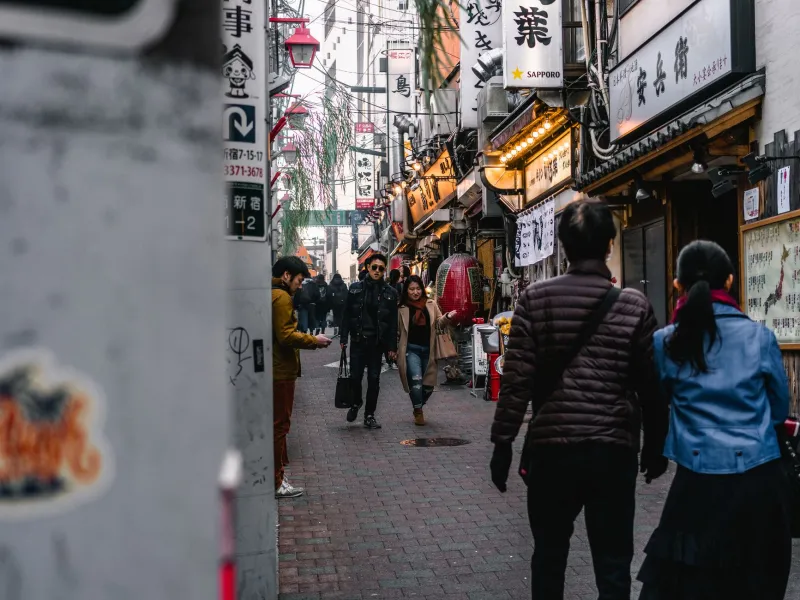
When you walk through Sapporo's Nakajima Park on a Sunday afternoon, you're not watching a cultural performance. You're watching Sapporo residents do what they actually do on Sunday afternoons — jog, walk dogs, sit by the pond, eat convenience store onigiri on a bench. The city's covered shopping arcades in Tanukikoji aren't tourist traps; they're where locals buy their winter coats and grab lunch. The izakayas in Susukino aren't there because someone decided to preserve the tradition of Japanese drinking culture — they're there because people in Sapporo like to eat and drink together after work, just like they always have.
This is the paradox the article title is gesturing at: Sapporo feels more authentically Japanese precisely because it has no particular interest in seeming Japanese to outsiders. The culture isn't on display. It's just... happening.
The Urban Design Angle
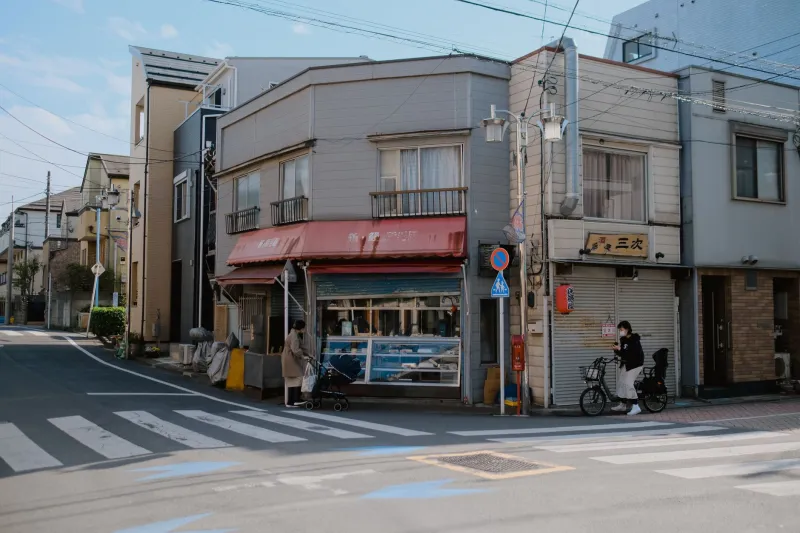
There's something specific about how Sapporo was built that contributes to this. The city's grid layout — wide boulevards, a logical numbering system, underground walkways connecting transit hubs — was designed for function, not charm. But that functionality created neighborhoods where actual community life took root. Blocks are walkable. Local shotengai (neighborhood shopping streets) still exist because residents need them, not because they've been preserved as heritage sites.
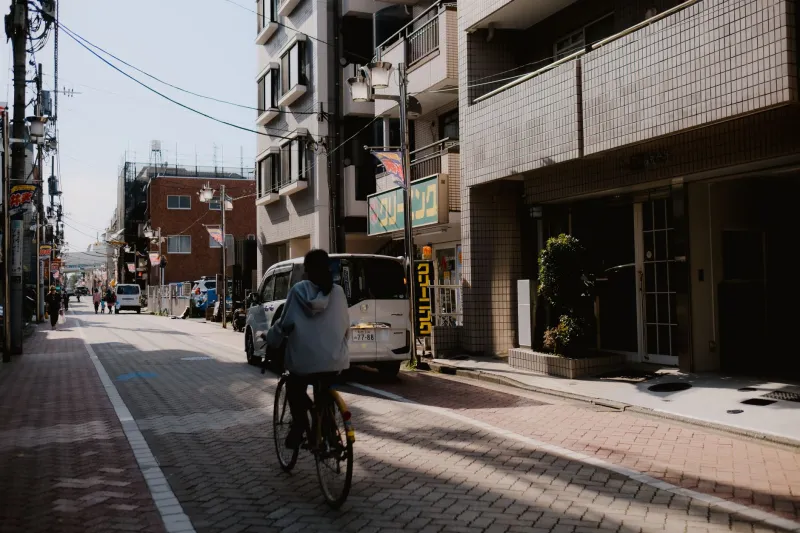
Compare that to some of Japan's tourist-heavy historic districts, where property values have climbed so high that longtime residents can no longer afford to stay, and where the businesses that survive are almost entirely oriented toward visitors. Sapporo's neighborhoods haven't been hollowed out in that way. Kita Ward, Shiroishi, Toyohira — these are places where people live full lives that have almost nothing to do with international tourism.
When you wander into those neighborhoods as a visitor, you're a guest in someone's actual neighborhood. That's a fundamentally different feeling than being a customer in a heritage attraction.
Tradition Without the Theater
None of this means Sapporo lacks cultural depth. The city takes enormous pride in its food traditions — Hokkaido's dairy and seafood industries have shaped a regional cuisine that locals defend with genuine passion. The Sapporo Snow Festival isn't a performance of Japanese winter culture; it's a civic event that Sapporo residents have been building and attending for over 70 years. Obon, New Year's, the rhythms of the agricultural calendar — these things matter here not because they've been packaged for visitors, but because they're woven into how people actually live.
The difference is that in Sapporo, you're more likely to encounter these traditions sideways — a neighborhood festival that isn't in any guidebook, a local market where the vendors are farmers rather than artisans selling to tourists, a ramen shop that's been in the same family for three generations and has never needed to advertise because the neighborhood already knows about it.
That's a harder experience to plan for. It requires more wandering, more willingness to not quite understand what's happening around you. But it's also closer to what most American travelers say they're actually looking for when they say they want to see 'real Japan.'
The Honest Trade-Off
To be fair: if you want to stand in front of a perfectly preserved Edo-period townhouse and feel the weight of Japanese history, Sapporo can't give you that. The city is young, and its architecture shows it. There are no ancient temples looming over the skyline.
What Sapporo offers instead is a city that hasn't been reshaped around your expectations. The food is extraordinary because the agriculture is extraordinary, not because someone decided to create a culinary tourism district. The people are friendly in a low-key, unhurried way because that's the local character, not because hospitality has been optimized for five-star reviews.
For American travelers who've done the Kyoto-Tokyo circuit and come away feeling like they visited Japan's greatest hits without ever quite touching the country itself, Sapporo is worth reconsidering. Not as a replacement for those places, but as a corrective — a reminder that authenticity isn't something you find in a preserved district. It's something you stumble into when a city is too busy being itself to notice you're watching.